Introducing Translation Studies
Theories and Applications

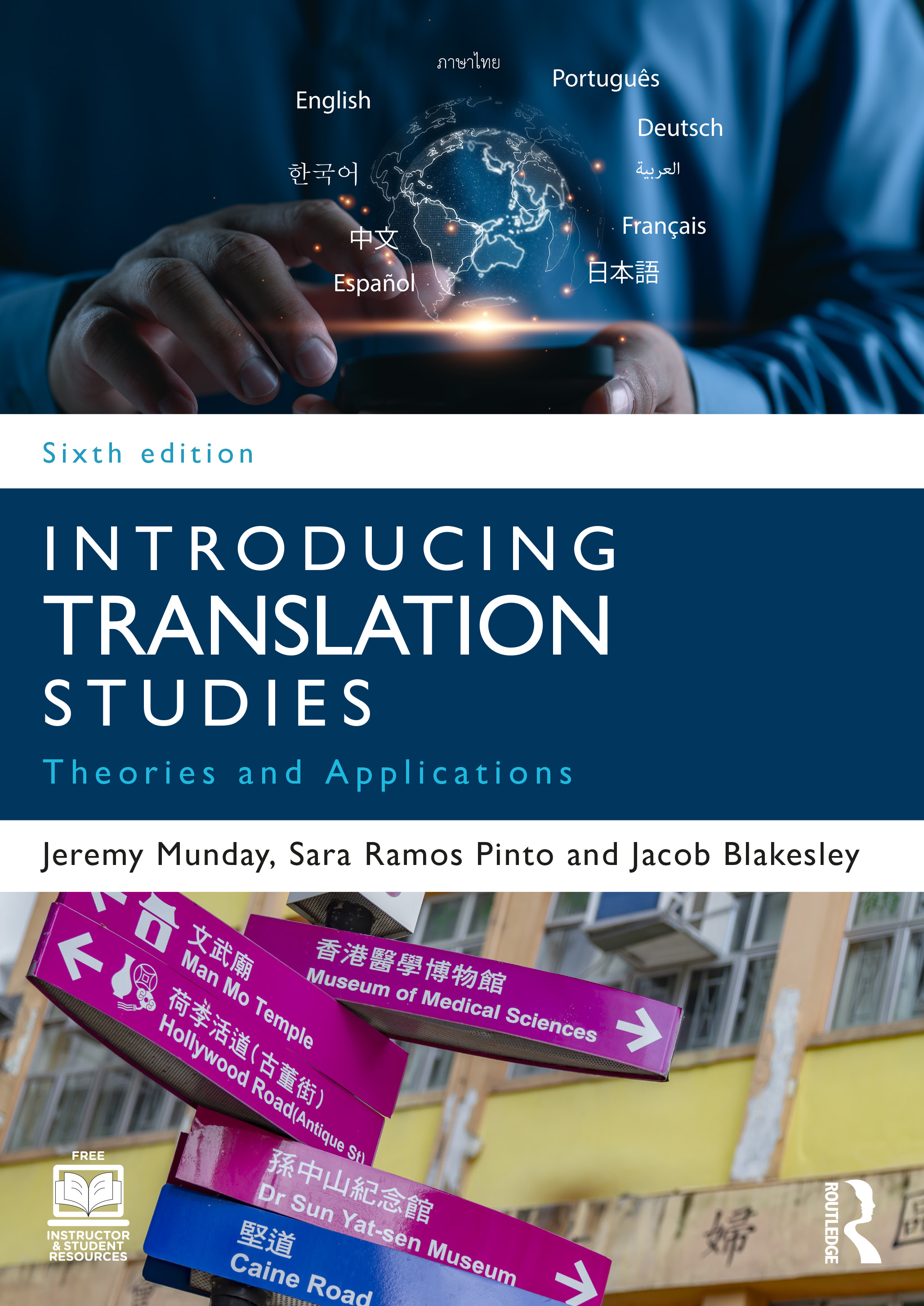
Introducing Translation Studies has long been the definitive guide to the theories and concepts that make up the field of translation studies. Providing an accessible and up-to-date overview, it is the essential textbook, used on courses worldwide.
This sixth edition has been substantially revised throughout to include important new material, and it continues to provide a balanced and detailed guide to the theoretical landscape. The theories are applied to a wide range of languages, including Arabic, Bengali, Chinese, English, Punjabi, Portuguese, French and German. A broad spectrum of texts is analysed, including websites, European Union documents, travel brochures, children’s books, Buddhist sutras, literary texts and films. Each chapter comprises an introduction outlining the theories, illustrative texts with translations, case studies, a chapter summary, and discussion points and exercises.
The Student and Instructor Resources include:
- Downloadable PowerPoint slides to support instructors
- Quizzes
- Flashcards
- Specially recorded new video introductions
- Curated journal articles and helpful weblinks
About the Authors
Jeremy Munday is Emeritus Professor of Translation Studies at the University of Leeds and an experienced translator. His Introducing Translation Studies was first published in 2001 and has been translated into some 15 languages. He is also the author of Style and Ideology in Translation (Routledge 2008) and Evaluation in Translation (Routledge 2012).
Visit his personal webpage
Sara Ramos Pinto is an Associate Professor in Translation Studies at the University of Leeds, Vice President of EST and Associate Editor of Target. Her work focuses on audiovisual translation and multimodality, and her recent publications include ‘To the Verbal and Beyond: A reception study on the limits of subtitling’ (2025).
Visit her personal webpage
Jacob Blakesley is Associate Professor in Comparative Literature at Sapienza University of Rome. He is the author of A Sociological Approach to Poetry Translation: Modern European Poet-Translators (Routledge 2018). He is co-series editor (with Duncan Large) of the Routledge Studies in Literary Translation series and co-series editor (with Matthew Treherne) of the Leeds Studies on Dante series.
Visit his personal webpage